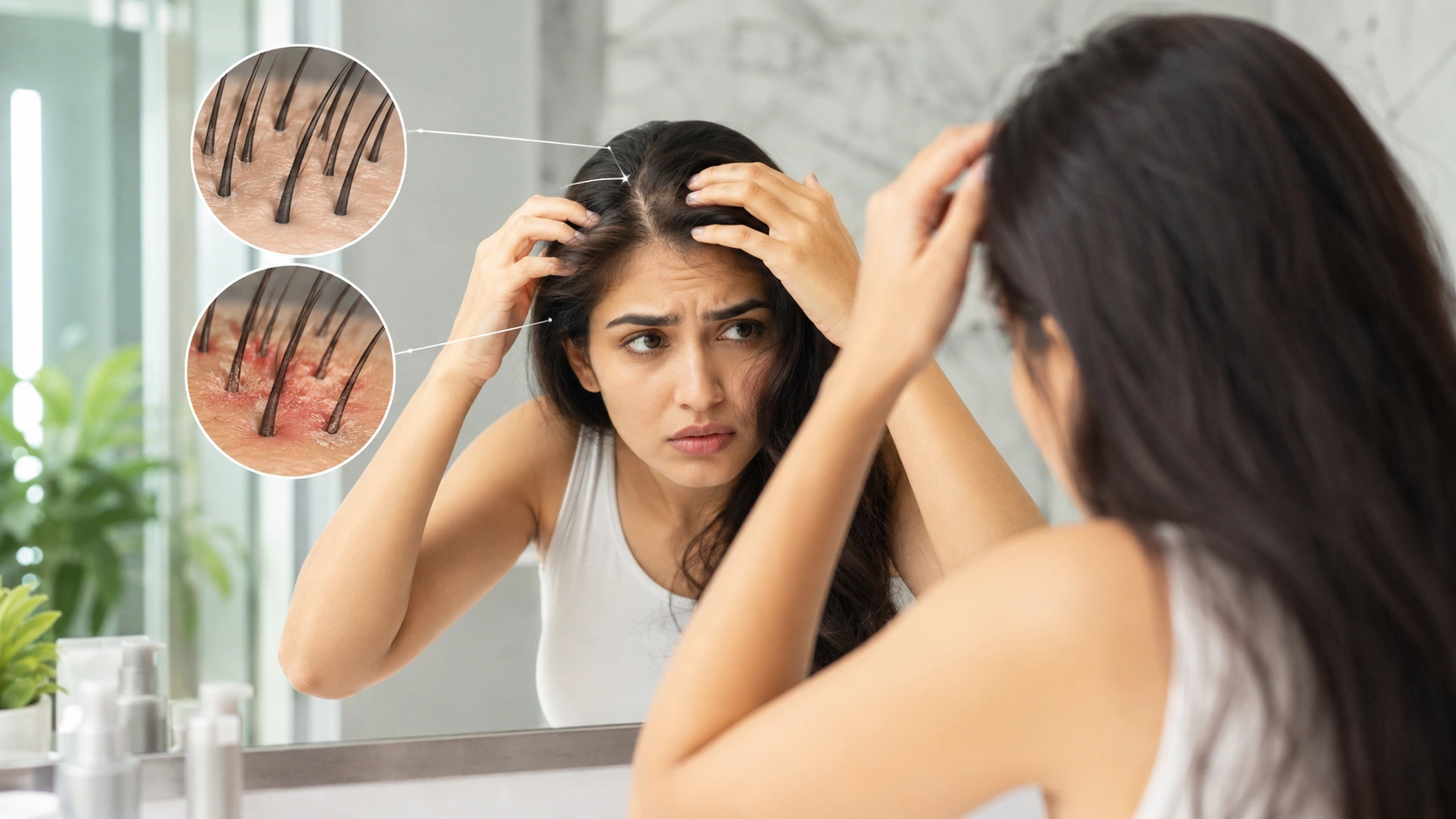
Hair thinning happens quietly, then all at once. One day the parting looks a little wider. Then the ponytail feels thinner. Then you’re checking the shower drain with an anxious ritual you didn’t have a year ago.
The causes of hair thinning in women are more varied than most people realise , and more addressable than most expect. It’s rarely just genetics. More often it’s a layered mix of hormonal shifts, nutritional gaps, stress patterns, and sometimes hair habits that have been doing quiet damage for years.
The right approach starts with understanding which cause is actually yours. Because the answer to that determines what you fix, how long it takes, and whether what you’re doing will actually work. Guessing wastes months. Knowing is where recovery starts.
The Real Causes of Hair Thinning in Women , And Why They Get Missed
Hair doesn’t thin for one reason. But it does thin for predictable ones , and most of them are underdiagnosed because the standard evaluation misses them.
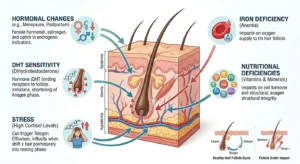
Hormonal fluctuations
Estrogen and progesterone extend the hair growth phase. When they drop , postpartum, during perimenopause, or with thyroid dysfunction , the growth phase shortens, shedding increases, and regrowth comes back finer. This pattern is called Female Pattern Hair Loss (FPHL) and is one of the most common causes of hair thinning in women over 30. It doesn’t require dramatic hormone changes , even subtle shifts move the needle on the follicle cycle.
Iron deficiency , specifically low ferritin
The most missed cause in routine hair loss evaluations. Ferritin , the stored form of iron , is critical for follicle function. Many women show normal haemoglobin on a standard blood test while sitting on critically low ferritin. The problem is ferritin isn’t tested unless specifically requested. Low ferritin means follicles don’t have the energy to sustain the growth phase , strands shed early, regrowth thins. This is one of the lesser-known causes of hair thinning in women, despite being highly treatable when identified early.
Chronic stress , telogen effluvium
Significant physical or emotional stress pushes large numbers of follicles from the growth phase to the resting phase simultaneously. The shedding peaks 2–3 months after the stressful event , which is exactly why women struggle to connect the dots. Illness, surgery, weight loss, a difficult period at work , all of it shows up in your hair 8–12 weeks later.
Nutritional gaps
Zinc, vitamin D, biotin, B12, and protein , all directly required for follicle function. Calorie-restricted diets, heavily plant-based eating without supplementation, and low dietary variety create quiet deficiencies that the body deprioritises away from hair before anything else.
DHT sensitivity
Dihydrotestosterone can miniaturise follicles in genetically susceptible women , producing the classic widening part and crown thinning pattern. Same mechanism as male pattern baldness, just expressed differently.
Most of these causes of hair thinning in women are reversible. Not instantly , follicles work on a 3–4 month cycle. But the reversal is real when the right cause is actually being addressed, not guessed at.
How to Stop Thinning Hair in Females Naturally

Natural here doesn’t mean casual. It means systematic , finding the actual cause and removing it, then creating the conditions where hair can grow back. Here’s what consistently works:
Fix the nutritional foundation first Before any topical treatment, get a blood panel done. Test serum ferritin, vitamin D, zinc, B12, and a full thyroid panel (TSH, free T3, T4). Then fix specifically what’s low:
- Ferritin below 50 ng/mL: supplement iron with vitamin C for better absorption, add iron-rich foods , red meat, spinach, lentils, tofu
- Low vitamin D: 2000–4000 IU daily supplementation , most Indian women are deficient even with regular sun exposure
- Zinc deficiency: eggs, pumpkin seeds, chickpeas daily
Reduce scalp inflammation
Chronic scalp inflammation shortens the follicle’s active phase. Cold or lukewarm rinses, sulfate-free shampoos, and regular scalp massage with rosemary oil , which research published in Skinmed Journal found comparable to minoxidil for mild hair loss after 6 months , all create a better environment for growth.
Manage cortisol
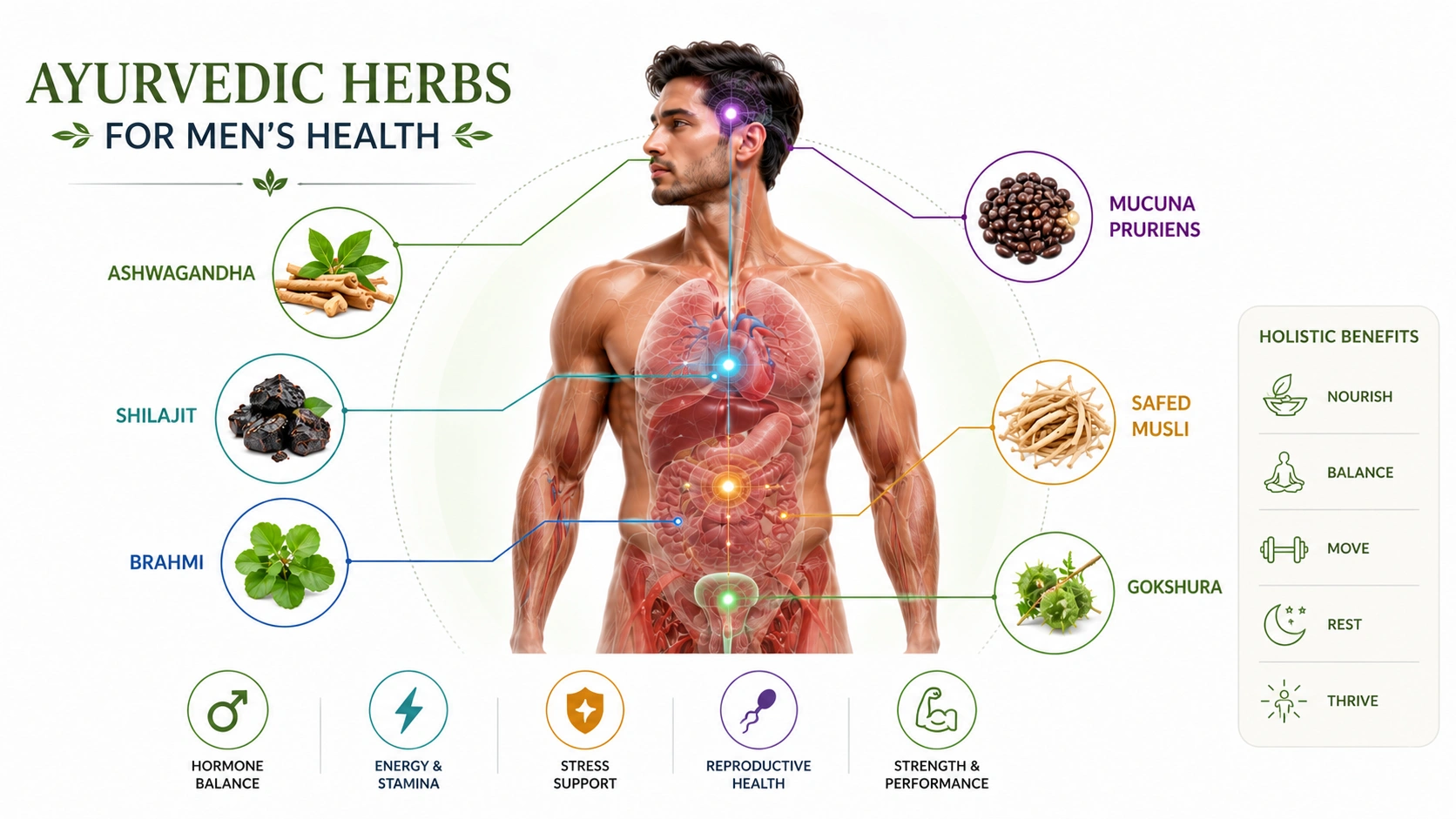
Stress is one of the causes of hair thinning in women that gets treated as a soft issue when it’s actually hormonal biology. Sustained cortisol suppresses the growth phase. Ashwagandha, better sleep, and moderate exercise reduce cortisol measurably over 4–8 weeks , and the hair reflects it, on delay.
Don’t skip protein
Hair is keratin. Keratin is protein. Women who consistently under-eat protein experience higher shedding because the body redirects amino acids away from hair first. Aim for 0.8–1g of protein per kg of body weight daily , not once in a while, consistently.
Natural approaches take time. One full follicle cycle is 3–4 months. The shift is slow, but it’s sustainable in a way nothing quick ever is.
The Big 3 for Thinning Hair , What They Are and How They Work Together
“The Big 3” is a term used most in male hair loss discussions , referring to minoxidil, finasteride, and ketoconazole. For women, the framework shifts. Because the causes of hair thinning in women are often linked to hormones, nutritional deficiencies, and genetics, the Big 3 that consistently come up across dermatology and trichology for female hair thinning are:
1. Topical Minoxidil
The most clinically studied topical treatment for Female Pattern Hair Loss. It extends the anagen (growth) phase and increases follicle size. 2% minoxidil is approved for women; 5% is used off-label and shows stronger results in some studies. It requires daily consistent use , effects reverse if stopped. It doesn’t fix the underlying cause, but it actively supports regrowth while you address what’s driving the loss.
2. Nutritional correction , iron, vitamin D, zinc
Not a single product but a diagnostic process. Women who correct low ferritin alone see meaningful hair recovery over 6–12 months without any topical treatment at all. This is one of the most effective approaches when the causes of hair thinning in women are linked to nutrient deficiencies. It is also the most underused of the three , because most women are never told to specifically test ferritin, and most doctors don’t connect it to hair loss without prompting.
3. Hormonal evaluation and management
Thyroid disorders, PCOS, and the estrogen-progesterone shifts of perimenopause are among the primary hormonal causes of hair thinning in women. A proper workup , TSH, free T3, T4, estradiol, testosterone, DHEA , identifies the driver that’s been operating quietly underneath everything else. Treatment varies. But identification always has to come first.
None of these three are effective in isolation. Stacked together , topical treatment, nutritional correction, and hormonal management , they cover the real ground. Which is why hair loss is so persistently frustrating when you’re only doing one thing.
Conclusion
Hair thinning in women is rarely one thing. It’s almost always layered , a nutritional gap here, a hormonal shift there, a stressful year that showed up in the mirror three months later.
The causes of hair thinning in women are identifiable , and in most cases, addressable. Not quickly, because biology doesn’t rush. But with the right diagnostics, the right nutritional foundation, and consistent support, the hair cycle corrects itself.
Start with blood work. Fix what’s actually low. Layer in topical and herbal support once you know where you actually stand. That’s the sequence that works , not the shortcut version, but the real one.
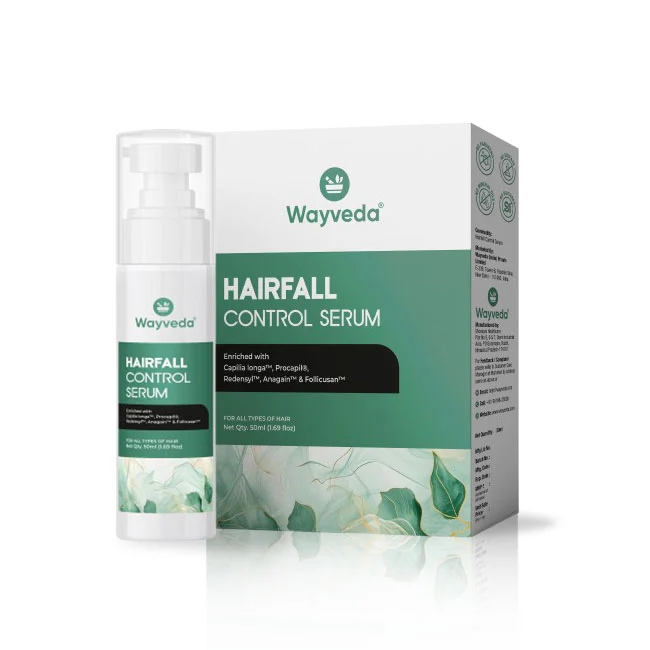
If you want support built specifically for the deficiency patterns most common in Indian women, Wayveda’s Hairfall Control Kit , formulated personally by Dr. Neha Mehta, India’s Top Intimacy Expert , addresses exactly this. No harmful chemicals. Real doses. Explore on Wayveda →
Frequently Asked Questions
Q1: What is the #1 cause of hair loss in women?
Hormonal changes are the most common overall , but low ferritin (stored iron) is the most commonly missed. Many women are told their iron is fine because haemoglobin looks normal, while ferritin sits critically low. Ferritin is the number most directly linked to follicle health, and it’s routinely skipped on standard panels. Always ask for it specifically , it changes the conversation.
Q2: How to regrow thinning hair in females?
Regrowth requires identifying the root cause first, then treating it:
- Nutritional deficiency: correct ferritin, vitamin D, zinc through targeted supplementation and diet
- Hormonal driver: thyroid or estrogen management with a doctor
- Topical support: rosemary oil and minoxidil both have clinical evidence for female regrowth
Expect 4–6 months minimum before visible change. The follicle cycle doesn’t compress, no matter what the packaging says.
Q3: At what age do women start experiencing hair thinning?
Most commonly between 30–40, often triggered by postpartum shedding, prolonged stress, or early hormonal shifts before perimenopause. Women in their 20s experience it too , usually linked to PCOS or nutritional deficiency. The cause tends to shift with life stage, which is why treatment that worked for a friend at a different age may not work for you at yours.
Q4: Does stress really cause hair thinning in women?
Yes , through a process called telogen effluvium. Significant stress pushes follicles from the growth phase to the resting phase in large numbers simultaneously. Shedding peaks 2–3 months after the stressful event, not during , which is why most women can’t identify the trigger. The good news is it’s self-resolving once the stressor is gone and nutrition is adequate. Most women recover within 6–9 months.
Q5: Can hair thinning from hormonal changes be reversed?
Often yes , especially when the hormonal shift is temporary (postpartum, acute stress) or when thyroid issues are caught and treated. Menopause-related estrogen decline causes more persistent thinning, but meaningful slowdown of progression is possible with nutritional support, topical treatments, and in some cases hormone therapy. Early identification almost always leads to better outcomes than waiting until loss becomes visible and obvious.
Q6: Is it possible to stop female hair thinning without medication?
For nutritional and stress-related thinning , yes, in many cases. Correcting iron, vitamin D, and zinc deficiencies, managing cortisol, improving protein intake, and using evidence-backed topicals like rosemary oil creates real recovery without prescription medication. For hormonal or genetic drivers, a medical evaluation becomes more important. Natural approaches work best when the root cause responds to them , and most common causes actually do.