Most women aren’t taught about vaginal pH. Not in a way that’s actually useful. The information either doesn’t happen or stays surface-level , avoid soaps, drink water, eat yogurt , and then something feels off and the first instinct is to Google symptoms at midnight hoping it’s nothing serious.
How to maintain vaginal pH balance is a question with real, practical answers. A healthy vaginal environment sits between pH 3.8 and 4.5 , mildly acidic, protected by Lactobacillus bacteria that produce lactic acid and keep harmful microorganisms in check. When that balance tips, the whole environment shifts. Bacteria and yeast that were being suppressed suddenly have room to grow.
Understanding what disrupts it , and what actually restores it , is where this becomes useful.
What Disrupts Vaginal pH Balance , And Why It Matters
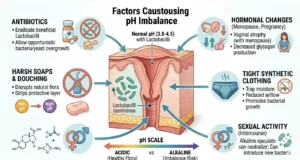
The vaginal environment is a self-regulating ecosystem. Healthy vaginal pH sits between 3.8–4.5 , acidic enough to suppress harmful bacteria, maintained by Lactobacillus that naturally colonise the vagina and produce lactic acid. It’s not fragile by design. But it is responsive to what’s around it.
Common disruptors women aren’t always told about:
Semen
Semen has a pH of 7.1–8. During and after penetrative sex, vaginal pH temporarily rises. Most women’s bodies self-correct within hours. For women already running low on Lactobacillus, this window of elevated pH is where bacterial vaginosis tends to take hold.
Antibiotics
They don’t just target the infection they’re prescribed for , they deplete protective bacteria indiscriminately. Antibiotic courses are one of the most consistent triggers for recurrent yeast infections precisely because they leave the vaginal microbiome unprotected.
Hormonal fluctuations
Estrogen supports Lactobacillus colonisation. During menstruation, menopause, postpartum recovery, and hormonal contraception, estrogen shifts , and so does microbial balance. Many women notice symptoms most around the tail end of a period, when vaginal pH is naturally at its highest.
Scented products and harsh soaps
The vagina is self-cleaning. Standard soap is alkaline , pH 9–10. Using it internally or repeatedly on the vulva raises pH and disrupts bacterial balance. The irony is that it makes infections more likely, not less.
Tight synthetic underwear
Reduces airflow, raises local temperature and moisture , both of which favour bacterial and yeast overgrowth. Not the primary cause, but a consistent contributor over time.
Knowing how to maintain vaginal pH balance starts with removing what’s working against it , not just adding products that claim to fix it.
How to Correct Your pH Balance Naturally
For mild imbalance , slight change in odour, shift in discharge, minor discomfort without a clear infection , natural correction is often effective and faster than most women expect. Understanding how to maintain vaginal pH balance starts with restoring the healthy bacteria that naturally protect the vaginal environment.

Probiotics are the most evidence-backed starting point
Lactobacillus rhamnosus and Lactobacillus reuteri specifically have clinical research behind them for restoring vaginal flora. Oral probiotics reach the vaginal microbiome through the gut-vagina connection. Consistency matters more than dose , daily use for 4–8 weeks shows the strongest results. Foods naturally high in Lactobacillus: plain curd, fermented rice, kefir, dosa batter.
Diet adjustments that actually support vaginal flora
- Reduce sugar , high glucose feeds yeast and directly disrupts bacterial balance
- Add fermented foods daily , curd, idli, fermented rice are all naturally probiotic
- Vitamin C , ascorbic acid has some evidence for supporting vaginal acidity when levels are low
- Stay hydrated , pH across mucous membranes is influenced by overall hydration
Boric acid suppositories for recurrent imbalance
Gynaecologist-recommended for restoring vaginal pH in cases of recurrent bacterial vaginosis or persistent yeast infections. Available over the counter. Brings pH back to 3.5–3.9. Not for use during pregnancy, but well-tolerated and clinically supported for chronic recurrence.
Switching to a pH-balanced intimate wash
It doesn’t fix an imbalance once it exists , but prevents the ongoing disruption that standard soap causes with repeated use. Look for products formulated at pH 3.5–4.5 specifically for intimate use. Choosing gentle intimate care products is an important part of how to maintain vaginal pH balance over the long term.
Natural correction works reliably for mild imbalance. For recurring symptoms despite consistent effort , or anything involving significant pain, unusual discharge colour, or bleeding , a clinical evaluation is the next step.Read More: Best Probiotic Foods for Women’s Intimate Health in India
How to Fix a Vaginal pH Balance , The Practical Sequence
“Fixing” vaginal pH is less about finding the right product and more about working through the right sequence , identifying the disruptor, removing it, restoring what was lost, and protecting it going forward.
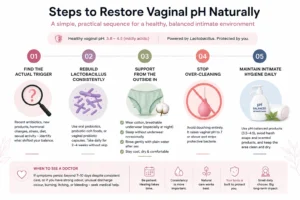
Step 1 Find the actual trigger
Before treating, figure out what shifted things. Recent antibiotics? New sexual partner? New soap or laundry detergent? Hormonal change? A prolonged stressful period that disrupted sleep and immunity? The trigger shapes the fix.
Step 2 Rebuild Lactobacillus consistently
Whether through oral probiotics, probiotic-rich food, or vaginal probiotic capsules , rebuilding Lactobacillus is central to how to maintain vaginal pH balance after disruption. This takes 2–4 weeks of uninterrupted, daily effort. Not occasional. Daily.
Step 3 Support from the outside in
- Cotton, breathable underwear , especially at night
- Sleeping without underwear occasionally reduces moisture buildup
- Rinse gently with plain water after sex , that’s enough
- Avoid douching entirely , it temporarily raises vaginal pH to 7 or above and strips protective bacteria
Step 4 Stop over-cleaning
Vaginal discharge is the mechanism that maintains pH , not something to clean away. A lot of pH disruption comes directly from over-cleaning out of misplaced concern. The discharge is doing its job. Leave it to.
When to see a doctor
If symptoms persist beyond 7–10 days of consistent correction, involve significant odour, unusual discharge colour, or burning and itching , a clinical evaluation rules out bacterial vaginosis or infection needing targeted treatment.
According to research in the Journal of Lower Genital Tract Disease, recurrent bacterial vaginosis affects 50–70% of women who’ve had one episode , making professional management important for chronic cases.
Conclusion
How to maintain vaginal pH balance is simpler in practice than the noise around it suggests. Remove what disrupts it , harsh soaps, douching, tight synthetics. Support what restores it , probiotics, diet, pH-appropriate products. And don’t over-clean an environment that’s designed to clean itself.
The vaginal environment is built to protect itself. It does that best when you’re not working against it. Small, consistent choices , not dramatic overhauls , are what sustainable vaginal health looks like. Understanding how to maintain vaginal pH balance long-term is less about following trends and more about supporting your body’s natural protective systems every day.
Wayveda was built for conversations exactly like this one. Intimate wellness without judgment, and without the guesswork that most brands leave you with.
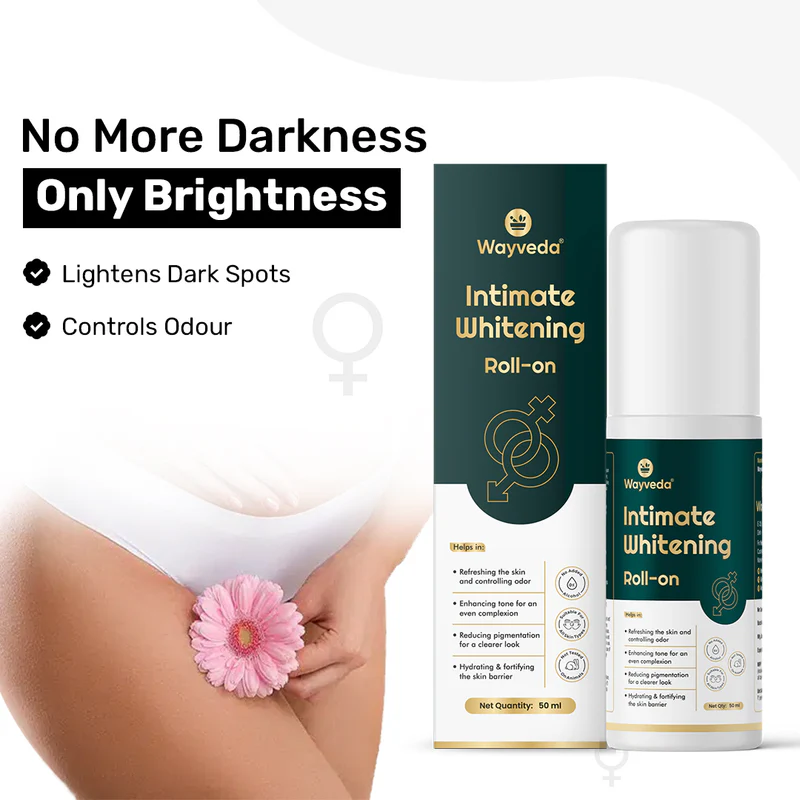
For intimate care formulated to work with your body’s natural balance , not against it , Wayveda’s Intimate Whitening Roll-On, created personally by Dr. Neha Mehta, India’s Top Intimacy Expert, is gentle, pH-conscious, and free from harmful chemicals.
Frequently Asked Questions
Q1: What are signs that your pH balance is off?
The most common signals:
- Change in discharge , colour (grey, yellow), consistency, or volume shifting from your normal
- Unusual or strong odour , particularly after sex, when semen raises vaginal pH temporarily
- Itching, irritation, or burning around the vulva
- Recurring yeast infections or bacterial vaginosis episodes
A single instance doesn’t always indicate a persistent imbalance. Patterns , recurring symptoms across multiple cycles , are what to pay attention to.
Q2: Is a 7.0 pH balance bad?
For vaginal health , yes, it’s a concern. Healthy vaginal pH sits between 3.8–4.5. At 7.0, the acidic environment that suppresses harmful bacteria is significantly weakened, and Lactobacillus bacteria struggle to maintain their protective presence. A pH of 7.0 creates conditions where bacterial vaginosis becomes substantially more likely. It’s not an emergency, but it needs active correction through probiotics and removing whatever’s causing the elevation.
Q3: Can diet affect vaginal pH?
Directly, yes. High sugar intake feeds yeast and disrupts microbial balance. Low probiotic intake means fewer Lactobacillus producing the lactic acid that keeps pH acidic. Fermented foods , curd, idli, kefir , support healthy vaginal flora through the gut-vagina connection. Vitamin C supports vaginal acidity when levels are low. Diet alone rarely fixes a significant imbalance, but it’s a consistent underlying factor most women don’t connect to vaginal health.
Q4: Does sex affect vaginal pH?
Yes , temporarily. Semen is alkaline (pH 7.1–8), which raises vaginal pH during and after sex. Most women’s bodies self-correct within a few hours. Using condoms reduces this disruption significantly. Rinsing gently with plain water after sex is sufficient , no internal washing needed. For women prone to bacterial vaginosis, daily probiotic use has evidence supporting post-sex pH recovery.
Q5: How long does it take to restore vaginal pH naturally?
Mild imbalance typically improves within 5–10 days once the disruptor is removed and probiotics are started. Post-antibiotic or post-infection disruption takes longer , 2–4 weeks of consistent daily probiotic use. Sporadic effort doesn’t rebuild a microbiome. Consistency is the only variable that matters here. If symptoms don’t shift meaningfully within 2 weeks of targeted changes, clinical evaluation is the right next move.
Q6: Is douching bad for vaginal pH balance?
Categorically yes. Douching removes Lactobacillus, flushes the acidic environment, and temporarily raises vaginal pH to neutral or alkaline , the opposite of what protection requires. Research consistently links regular douching to higher rates of bacterial vaginosis, pelvic inflammatory disease, and fertility complications. The vagina is self-cleaning. Knowing how to maintain vaginal pH balance means understanding that internal cleaning works against the very system keeping you protected.