Most men think about sperm health only when something forces them to. That’s understandable — it’s not the kind of thing anyone brings up casually. But the window for making changes is open long before a problem appears, and that’s when changes are easiest and most effective.
How to improve sperm quality naturally is a question with real, researched answers. Sperm production is sensitive to the same things that affect overall male health — nutrition, sleep, stress, heat, and a few specific nutrients most men aren’t tracking. Fix those things, and sperm quality follows.
This article covers the dietary angle, the Ayurvedic angle, what sperm motility numbers actually mean, and where to start without getting lost in supplement marketing. Honest. Practical. No fluff.
What Actually Damages Sperm Quality — And How to Start Fixing It
Before the remedies — the biology. Because understanding what breaks sperm quality down is what tells you what actually fixes it.
Sperm development takes approximately 74 days from start to ejaculation. The choices you’re making today show up in your sperm quality three months from now. Changes work — but they’re slow. That’s the honest timeline going in. Understanding this timeline is essential if you’re serious about learning how to improve sperm quality naturally.
Heat
Heat is the most underestimated factor. Scrotal temperature needs to stay 2–4°C below body temperature for healthy sperm production. Laptops on laps, long hot baths, heated car seats, tight underwear — none of this feels significant, but it adds up in ways most men never connect to fertility.
Oxidative stress
Oxidative stress is the other major driver. Sperm are uniquely vulnerable to free radical damage because of their high polyunsaturated fat content. Antioxidants — vitamin C, vitamin E, selenium, coenzyme Q10 — directly protect sperm from oxidative damage. A diet low in antioxidants is quietly degrading sperm quality week after week.
Zinc deficiency
Zinc deficiency is extremely common and directly impacts sperm count and motility. Zinc is essential for testosterone production and sperm cell development. Low zinc equals lower sperm quality. Oysters, pumpkin seeds, and eggs are the most efficient dietary fixes for men looking at how to improve sperm quality naturally through nutrition.
Chronic stress
It raises cortisol, which suppresses testosterone, which then reduces sperm production. The pathway is direct and measurable. Men under sustained stress show consistently lower sperm parameters than those who aren’t — regardless of what they eat.
What to eat specifically:
- Zinc-rich foods — oysters, eggs, pumpkin seeds, lean red meat
- Antioxidant foods — pomegranate, walnuts, tomatoes, dark leafy greens
- Healthy fats — avocado, extra virgin olive oil, fatty fish (sperm membranes are made of fat)
- Folate sources — spinach, lentils — supports sperm DNA integrity
Knowing how to improve sperm quality naturally starts here — not with supplements, but with the nutritional gaps that most men haven’t connected to their reproductive health yet.
How Ayurveda Increases Sperm Count and Quality
Ayurveda approaches sperm health through what it calls Shukra dhatu — the reproductive tissue. The goal isn’t a fast fix. It’s building the internal conditions where healthy sperm production becomes sustained and natural. For many men, this is an important part of how to improve sperm quality naturally over the long term.

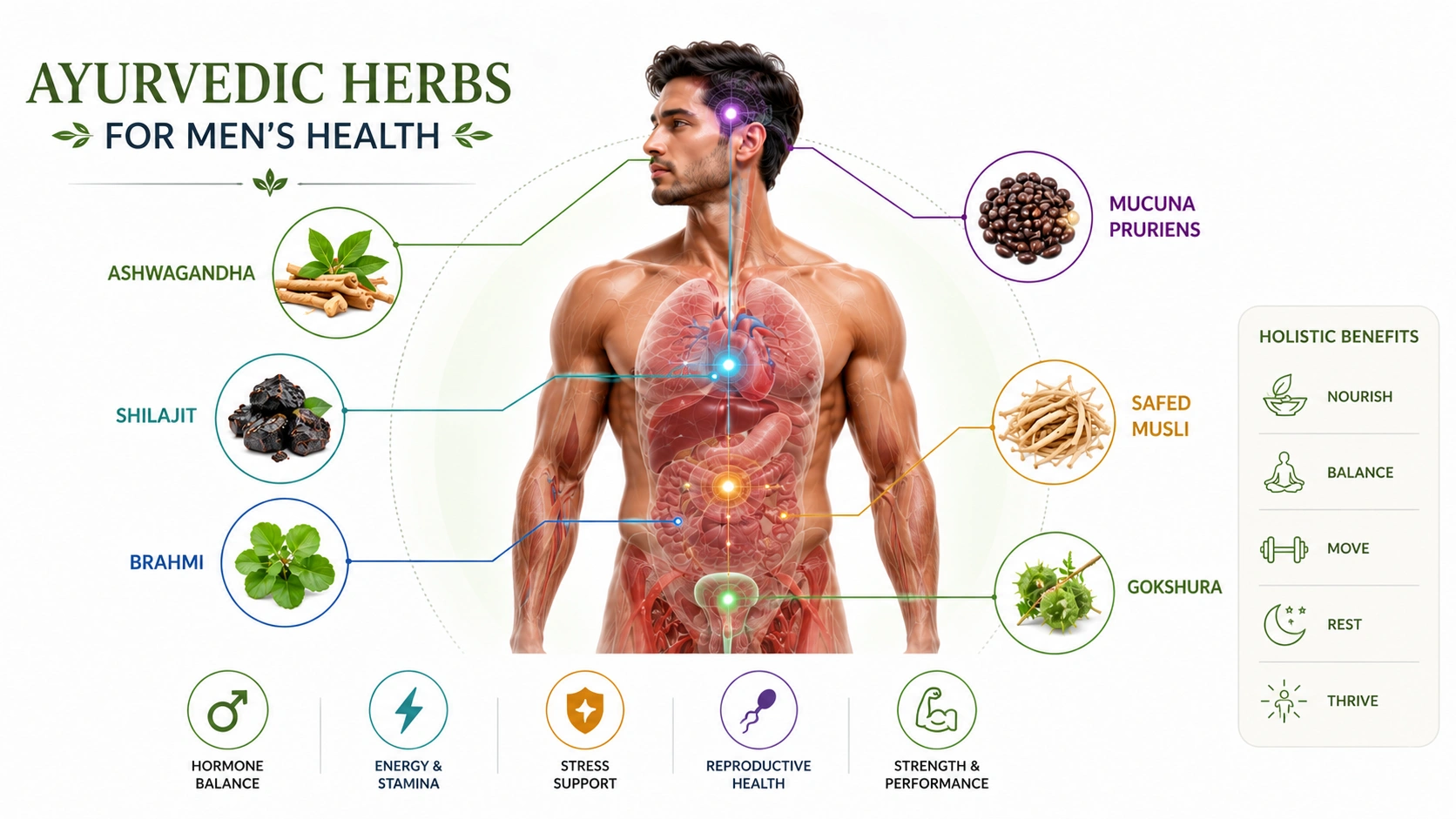
The herbs that have the strongest evidence behind them:
Ashwagandha (Withania somnifera)
A clinical study published in Fertility and Sterility found men with low sperm count who took ashwagandha root powder showed significant improvements in sperm count, motility, and semen volume after 90 days. The mechanism is clean: ashwagandha reduces cortisol, which allows testosterone to rise, which directly drives sperm production.
Shilajit
Fulvic acid in shilajit supports mitochondrial function in sperm cells — and mitochondria are what power sperm motility. Research in Andrologia found sperm count improved by 60% and motility improved significantly after 90 days of shilajit supplementation. One of the more compelling datasets available for a natural male fertility intervention.
Kapikacchu (Mucuna pruriens)
A 2009 clinical study found Mucuna pruriens improved sperm motility and count in both fertile and infertile men. It also reduces oxidative stress in seminal plasma — directly protecting sperm from the free radical damage discussed above. Contains L-DOPA, which also supports dopamine — the motivation and desire pathway.
Safed Musli (Chlorophytum borivilianum)
Traditional tonic for male reproductive health. Clinical evidence is less robust than the above, but it’s consistently used for sperm count in men and overall semen quality in Ayurvedic practice.
The approach isn’t to pick one herb and hope. It’s to reduce cortisol, improve cellular energy, and lower oxidative stress — all simultaneously. How to improve sperm quality naturally through Ayurveda means treating the system, not chasing a single symptom.
Understanding Sperm Motility — Is 70% Actually Good?
Short answer: yes. 70% sperm motility is above the WHO reference range and sits in genuinely healthy territory.
Here’s what the numbers actually mean. WHO guidelines classify motility as:
- Total motility (any movement): ≥42% is the lower reference limit
- Progressive motility (forward movement): ≥32% is considered normal
- 70% total motility puts you comfortably above both thresholds
But motility is only one part of the picture. A full semen analysis looks at four parameters together:
- Count — total sperm per ml (normal: ≥16 million per ml)
- Motility — percentage of moving sperm
- Morphology — shape and structure (normal: ≥4% normal forms by Kruger criteria)
- Volume — total semen per ejaculate (normal: ≥1.4ml)
High motility with low count or poor morphology still creates fertility challenges. The parameters interact. No single number tells the complete story — which is why reading a semen analysis out of context can send men into unnecessary anxiety or false reassurance.
If your motility is 70%, that’s a strong result and not where your attention needs to be. The focus then shifts to count and morphology — and that’s where targeted diet changes, heat avoidance, and Ayurvedic supplementation make the most meaningful difference.
Understanding your actual numbers is the first step in knowing how to improve sperm quality naturally in the areas that genuinely need work — rather than trying to fix something that’s already healthy.
Conclusion
Sperm quality isn’t fixed. It’s responsive — to what you eat, how much you sleep, how much stress you carry, and whether your body is getting the nutrients it needs to build healthy cells.
The timeline is long — about three months per cycle — but the changes are real and measurable. How to improve sperm quality naturally is less about finding the right herb and more about removing what’s quietly causing damage: heat, oxidative stress, zinc deficiency, cortisol. Once those are addressed, the right dietary support and Ayurvedic herbs genuinely add to the result.
Wayveda exists for exactly this — products formulated by someone who understands the science, not the marketing. Slow, honest, real progress.
If you want something that works alongside your diet and lifestyle changes, Wayveda’s Power Capsules — formulated personally by Dr. Neha Mehta, India’s Top Intimacy Expert — support men’s hormonal health and reproductive wellness naturally. Lab-tested. No harmful chemicals. Explore on Wayveda →
Frequently Asked Questions About Sperm Quality and Male Fertility
Q1: How can I boost my sperm naturally?
The fastest natural levers: reduce heat exposure (no laptops on laps, cooler baths, looser underwear), add antioxidants daily (pomegranate, walnuts, spinach), fix zinc intake (eggs, oysters, pumpkin seeds), and eliminate alcohol. Results take 8–12 weeks minimum — one sperm development cycle is 74 days, so shortcuts genuinely don’t exist here. Consistency over time is the only thing that works.
Q2: Which drink improves sperm?
Pomegranate juice is the most research-backed — high in antioxidants that directly reduce oxidative stress in sperm cells. Fresh tomato juice (lycopene) and ashwagandha milk are strong additions. Avoid alcohol completely — it reduces testosterone, sperm count, and motility simultaneously. Even moderate but regular drinking causes measurable damage to sperm quality over time.
Q3: How long does it take to improve sperm quality naturally?
One full sperm development cycle is approximately 74 days. Realistically:
- Dietary and antioxidant changes show up after 8–12 weeks
- Reducing heat exposure helps within 1–2 full cycles
- Ashwagandha and shilajit supplementation shows measurable results by week 10–12
The biology doesn’t compress. Patience isn’t optional here — it’s built into the timeline.
Q4: Does smoking affect sperm quality?
Yes — significantly. Smoking increases oxidative stress in seminal plasma, damages sperm DNA, and lowers both count and motility. Research consistently shows smokers have 13–17% lower sperm concentration than non-smokers. Quitting is one of the most impactful single changes a man can make — and the recovery shows up in sperm analysis within two to three full cycles.
Q5: Can chronic stress cause low sperm count?
Yes — through a direct hormonal pathway. Chronic stress raises cortisol, which suppresses testosterone, which reduces sperm production. Men under sustained work or emotional stress consistently show lower sperm parameters in clinical studies. This is precisely why ashwagandha is so relevant for how to improve sperm quality naturally in men under pressure — it specifically targets cortisol reduction while supporting testosterone simultaneously.
Q6: What sperm count is needed to conceive naturally?
WHO guidelines set the lower reference limit at 16 million sperm per ml with total motility ≥42%. Counts above this range, combined with decent morphology, support natural conception for most couples. Below this doesn’t mean conception is impossible — but timing, frequency, and a medical evaluation become significantly more important. Always assess a semen analysis across all four parameters, not just one number in isolation.