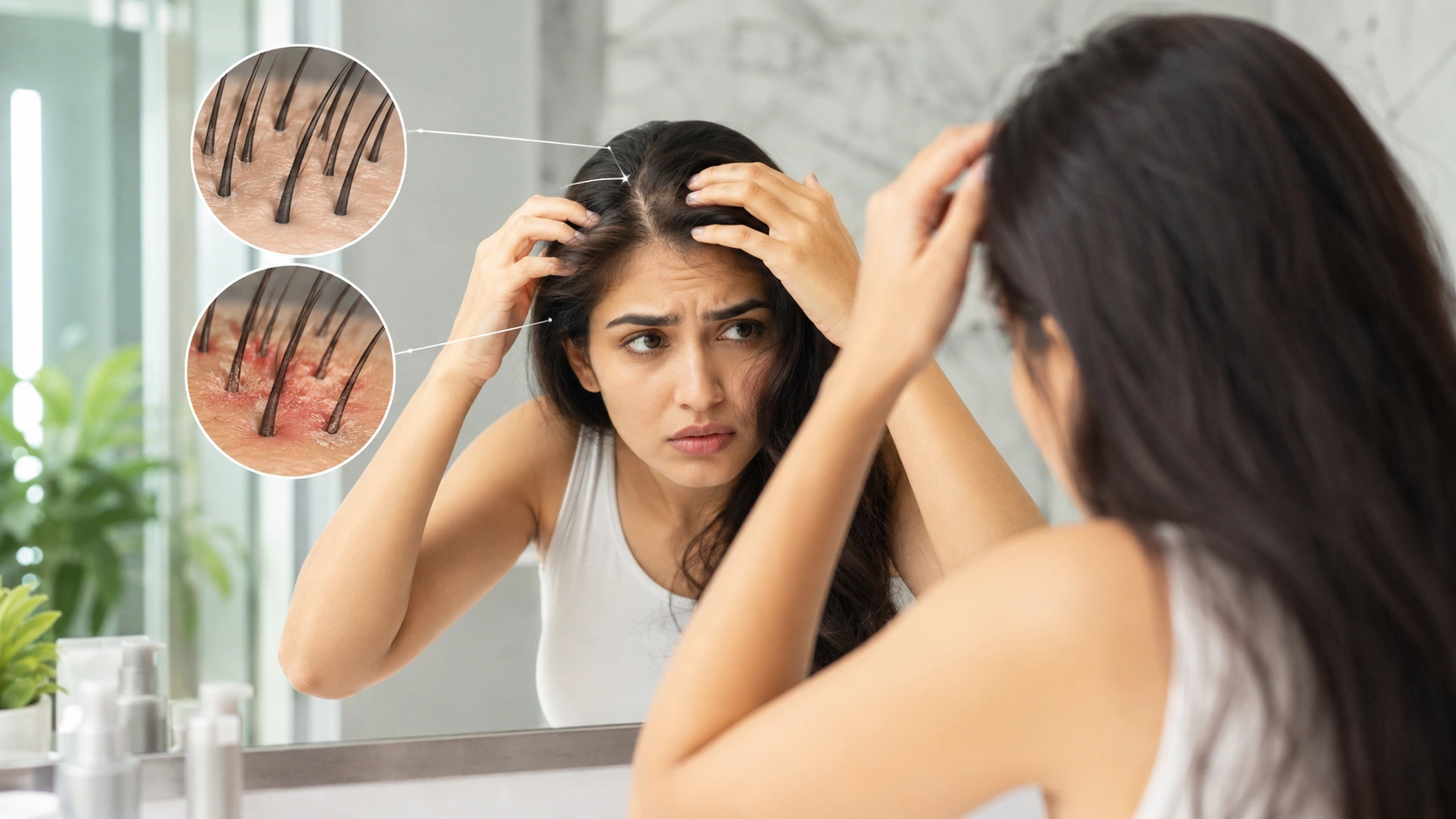
Most people notice the hair before they notice the scalp. The thinning, the shedding, the texture shift — and then they start buying shampoos for the hair itself, treating the symptom while the actual problem sits a few millimetres below the surface, completely unaddressed.
The signs of an unhealthy scalp show up before the hair loss does. Sometimes months before. Itching that comes and goes, flakes that return despite switching products, hair that grows slower than it used to — these aren’t just cosmetic irritations. They’re signals from the follicle environment that something has shifted.
Understanding what each sign actually means — and what targeted fix addresses it — is what turns scalp health from a vague concept into something you can genuinely act on. Here are nine things your scalp may be telling you right now.
9 Signs of an Unhealthy Scalp — What Each One Actually Means
These show up in different combinations for different people. Some are obvious. Some get dismissed for years before someone connects them to hair loss.
1. Persistent dandruff
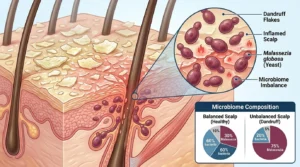
Occasional flaking is normal. Persistent, recurring dandruff that returns within days of washing is typically driven by Malassezia yeast overgrowth — a fungal imbalance that triggers chronic scalp inflammation. That inflammation shortens follicle growth cycles and increases shedding. Dandruff isn’t a hygiene issue. It’s a scalp microbiome issue requiring targeted antifungal treatment.
2. Itchy scalp without visible flaking
Itch without flakes points to contact dermatitis — often from a product ingredient like sulphates, fragrance, or preservatives — or to early scalp psoriasis. Identifying and removing the trigger resolves it faster than any soothing treatment applied on top.
3. Excessively oily or greasy scalp
Overproduction of sebum can block follicle openings, trap dead skin cells, and create a low-oxygen environment around the follicle. Often triggered by over-washing — which strips oil, triggering compensatory overproduction — or hormonal imbalance, particularly elevated androgens.
4. Dry, tight scalp after washing
Feeling tight or dry immediately after washing is a stripped skin barrier — a direct sign the shampoo is too harsh for your scalp type. Chronic stripping increases scalp inflammation, reduces sebum protection, and contributes to increased breakage at the root.
5. Increased hair shedding
Losing more than 100 strands daily — or noticing significant change in shedding volume — signals the follicle is spending less time in the anagen (growth) phase. This is one of the clearest signs of an unhealthy scalp and responds to addressing the specific driver: nutritional deficiency, inflammation, hormonal shift, or stress.
6. Scalp redness or visible inflammation
Localised or diffuse redness indicates active inflammation — potentially seborrheic dermatitis, contact reaction, or scalp psoriasis. Untreated scalp inflammation consistently correlates with increased follicle miniaturisation over time.
7. Scalp acne or folliculitis
Pimples, pustules, or tender bumps on the scalp are folliculitis — bacterial or fungal infection of the follicle opening. Often worsened by heavy product buildup, heat, and sweat trapped against the scalp. Not just uncomfortable — active folliculitis scars the follicle if untreated.
8. Persistent scalp odour
A scalp that smells unpleasant between washes — even when hair appears clean — suggests bacterial overgrowth, excess sebum oxidation, or fungal activity. Distinct from normal scalp smell. Usually resolves with correct washing frequency and an antimicrobial or clarifying treatment.
9. Visibly slowed hair growth
When hair that used to grow 1–1.5cm a month is now noticeably slower, the follicle is either not cycling properly or is receiving inadequate blood flow and nutrition. Often the last sign noticed — because it accumulates invisibly over months before the difference becomes clear.
How to Fix an Unhealthy Scalp Naturally — What the Research Supports
The approach to fixing an unhealthy scalp isn’t one product. It’s removing what’s disrupting it, rebuilding what’s been depleted, and then protecting consistently. Here’s the structured sequence:
Step 1 — Identify the specific sign and its driver
Generic scalp treatments fail because they don’t match the cause. Dandruff needs antifungal intervention — ketoconazole or zinc pyrithione shampoo used twice weekly for 4–6 weeks. Dryness needs barrier repair — a sulphate-free, pH-balanced shampoo and reduction of washing frequency. Excess oil needs regulated sebum management, not daily stripping. Match the fix to the actual unhealthy scalp symptom.
Step 2 — Clarifying wash first
Before any treatment, remove product buildup, mineral deposits from hard water, and excess sebum that’s blocking follicle openings. A clarifying shampoo used once breaks through what regular washing doesn’t. Hard water mineral buildup — particularly common across Indian cities — responds well to a diluted apple cider vinegar rinse (1 tablespoon in 500ml water) applied post-wash, left 5 minutes, then rinsed.
Step 3 — Rosemary oil directly on scalp

Research published in Skinmed Journal found rosemary oil applied topically for 6 months produced hair count increases comparable to 2% minoxidil — without the scalp dryness that minoxidil commonly causes. Mechanism: improved scalp microcirculation, reduced DHT absorption at the follicle, mild anti-inflammatory activity. Apply 2–3 times weekly, massage in for 4 minutes, wash out after 45–60 minutes.
Step 4 — Nutrition — zinc and vitamin D specifically
Scalp inflammation and slow follicle cycling both respond to zinc adequacy. Low zinc is consistently associated with seborrheic dermatitis recurrence and increased shedding. Low vitamin D weakens follicle cycling directly. These aren’t optional background factors — they’re front-line interventions for the signs of an unhealthy scalp that don’t resolve with topicals alone.
Why Is Gen Z Losing Hair? The Scalp Connection Nobody Is Talking About
Hair loss in people under 25 is rising — and the conversation around it keeps pointing to genetics while largely missing what’s actually changed for this generation specifically.
Gen Z is losing hair earlier than previous generations — and the scalp health picture is a significant part of why.
Chronic stress — structurally higher than previous generations
Research consistently shows Gen Z reports higher anxiety, lower sleep quality, and more sustained psychological stress than Millennials did at the same age. Cortisol suppresses the hair growth phase directly. Telogen effluvium — stress-triggered shedding — is being diagnosed in men and women in their early 20s in numbers dermatologists weren’t seeing a decade ago.
Diet patterns that create specific deficiencies
High ultra-processed food intake, irregular eating, and meal-skipping create consistent zinc, iron, and protein deficits — the exact three nutrients follicle health is most dependent on. A generation eating more conveniently than nutritionally is showing up at dermatologists with unhealthy scalp symptoms that are fundamentally nutritional in origin.
Product overuse and early chemical exposure
Gen Z adopted hair styling products, bleaching, and heat tools earlier and more extensively than previous generations. Early and repeated chemical scalp exposure triggers inflammation and follicle damage that accumulates invisibly — then shows up as thinning in the mid-20s.
Screen time and disrupted sleep architecture
Late-night phone use delays melatonin release and shortens deep sleep — the window where most hair growth-related hormones, including testosterone and growth hormone, are produced. Chronic sleep disruption is one of the most consistent upstream drivers of the signs of an unhealthy scalp in young people, and it’s almost never mentioned in the products being marketed to this age group.
According to a 2023 survey by the International Society of Hair Restoration Surgery, consultations from patients under 30 increased by 30% over the previous five years — with stress and nutritional factors cited as primary drivers in cases without genetic predisposition. (Source: ISHRS)
Conclusion
The signs of an unhealthy scalp are messages, not just symptoms. Dandruff tells you the microbiome is off. Tightness tells you the barrier is stripped. Slowed growth tells you the follicle isn’t getting what it needs.
None of these require dramatic intervention. They require the right one — matched to the actual cause, applied consistently, with enough time to actually work. A healthy scalp doesn’t look or feel dramatic. It’s just quiet — no itch, no excess oil, no flaking, no tightness. That quiet is what healthy growth comes from.
Wayveda was built on the principle that real results come from understanding what’s actually wrong — not from product marketing that skips the diagnosis and sells you the treatment anyway.
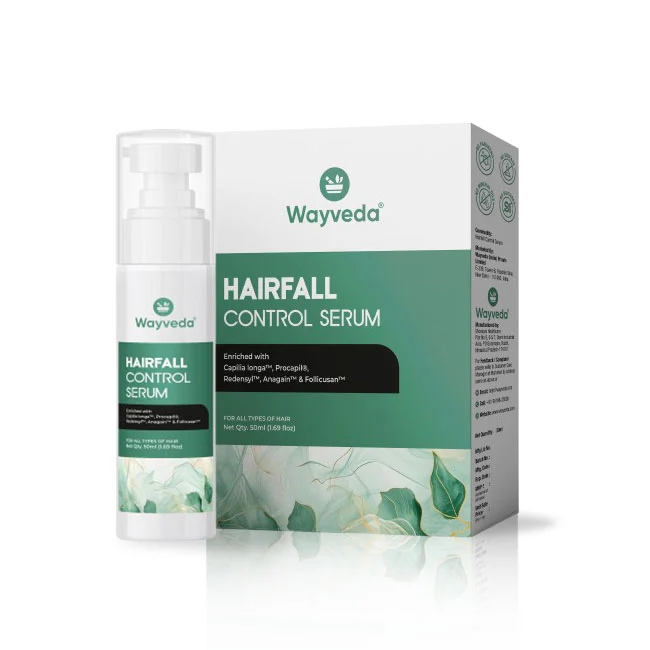
If you want topical support specifically formulated to address scalp inflammation and support follicle health, Wayveda’s Hairfall Control Serum — created personally by Dr. Neha Mehta, India’s Top Intimacy Expert — delivers active ingredients at the scalp level. No harmful chemicals. Explore on Wayveda →
Frequently Asked Questions About Scalp Health and Hair Loss
Q1: What makes up 90% of hair?
Keratin — a structural protein made from amino acids absorbed through your diet. Hair is approximately 95% keratin, with water, lipids, melanin, and trace minerals making up the remainder. This is the direct biological reason inadequate protein intake slows hair growth and increases breakage — the raw material for building each strand simply isn’t available in sufficient quantity at the follicle level.
Q2: Can coconut oil stop an itchy scalp?
For dryness-related itch — yes, meaningfully. Coconut oil’s lauric acid penetrates the hair shaft and scalp surface, reducing protein loss and providing temporary barrier support. For fungal or inflammation-driven itch — less effective, and sometimes counterproductive, as heavy oil can feed Malassezia yeast. Identify the itch type first:
- Dry, tight, flaky → coconut oil helps
- Greasy, dandruff-driven, inflamed → use antifungal shampoo instead
Q3: How long does it take to restore a healthy scalp?
Mild disruption — dryness, product buildup, occasional dandruff — typically improves within 2–4 weeks of consistent corrective care. Chronic scalp inflammation, fungal conditions, and folliculitis require 6–12 weeks of targeted treatment before the scalp environment stabilises. Hair growth improvements following scalp recovery take longer — one full follicle cycle is 3–4 months, so visible density changes emerge around that mark even when the scalp is healthy again.
Q4: Is washing hair every day bad for the scalp?
For most hair types — yes. Daily washing strips natural sebum faster than the scalp replenishes it, triggering compensatory overproduction that makes the scalp greasy within hours of washing. The cycle reinforces itself. For Indian hair specifically — which naturally produces more sebum — washing twice to three times weekly with a gentle sulphate-free shampoo maintains the scalp environment without stripping. The exception is very oily scalp types or post-exercise — in which case a very mild co-wash is better than a full shampoo.
Q5: Can a scalp condition cause permanent hair loss?
Yes — but only in specific untreated cases. Folliculitis left untreated can scar the follicle, creating permanent bald patches in the affected area. Lichen planopilaris and frontal fibrosing alopecia — both scarring alopecia conditions — permanently destroy follicles if not caught early. Common conditions like seborrheic dermatitis and dandruff cause reversible shedding through inflammation — they don’t permanently damage follicles when properly treated. Early identification of the signs of an unhealthy scalp is specifically what prevents the reversible from becoming permanent.
Q6: Does stress directly cause scalp problems?
Yes — through several simultaneous pathways. Elevated cortisol disrupts the scalp’s immune regulation, making it more reactive to fungal overgrowth and inflammation. Stress also increases sebum production through androgen elevation, worsening oiliness and dandruff. Telogen effluvium — mass shedding triggered by stress — creates the visible hair loss, but the scalp inflammation that precedes it is often already present weeks earlier. Managing stress isn’t a soft recommendation for scalp health — it’s a direct biological intervention with measurable impact on the scalp environment.