A lot of people notice it and say nothing. There is a quiet discomfort in seeing your skin change in places you do not talk about openly , the inner thighs, the intimate folds, the underarms. It often gets darker gradually, and because it happens slowly, it is easy to dismiss or attribute to the wrong cause.
The truth about the causes of dark intimate area skin is actually well understood. It is not about poor hygiene. It is not about being unhealthy. And for most people, it is not a condition that requires a doctor. It is a response , a completely natural but often frustrating response , to a set of daily physical and hormonal triggers that most people have never been told about.
Once you understand why the skin is darkening, the path forward becomes much clearer. You stop blaming the wrong things and start addressing the right ones. And the results , with consistency , are real.
What Are the Main Causes of Dark Intimate Area Skin?
The most common causes of dark intimate area skin include friction from clothing and movement, hormonal changes, sweating and moisture buildup, post-inflammatory hyperpigmentation from shaving or waxing, tight synthetic clothing, and certain medications. In most cases, these triggers stimulate excess melanin production in sensitive skin areas.
- Repeated friction from thighs rubbing together while walking
- Tight or synthetic clothing that traps heat and moisture
- Hormonal fluctuations during puberty, pregnancy, or with PCOS
- Skin darkening due to sweating and bacterial activity
- Post-inflammatory response from shaving, waxing, or threading
- Insulin resistance and metabolic conditions
- Prolonged use of certain medications
Friction , The Most Common Reason Most People Never Consider
If there is one cause that affects more people than any other, it is friction. In fact, friction is one of the leading causes of dark intimate area skin that most people never consider. The inner thighs are in near-constant contact during walking, running, and sitting. That friction causing dark skin is not just a surface issue , it triggers a biological response deep in the skin.
Every time the skin rubs against itself or against fabric repeatedly, it experiences low-level trauma. The body responds the same way it responds to any repeated irritation , by sending melanocytes (the pigment-producing cells) to the area to produce more melanin. Over time, this accumulation of melanin creates visibly darker skin.
This is why people who are more physically active, who have larger thighs, or who wear rough or tight clothing often experience more inner thigh darkening than others. It has nothing to do with cleanliness and everything to do with physics and biology. These daily triggers are among the most common causes of dark intimate area skin seen in both men and women.
Understanding how to reduce friction pigmentation in private part areas starts with minimizing repeated rubbing, choosing breathable fabrics, keeping the skin dry, and maintaining a gentle skincare routine that supports skin recovery over time.
Hormones Affect Skin Color More Than People Realize
Hormonal changes are one of the less-discussed but very real intimate area pigmentation reasons. In many cases, hormonal fluctuations are also significant causes of dark intimate area skin, especially during major life stages like puberty and pregnancy. The link between hormones and skin pigmentation is well-established in dermatology, but rarely communicated to people outside of pregnancy or melasma discussions.
During puberty, rising estrogen and androgen levels can trigger melanocyte activity in intimate and body-fold areas. During pregnancy, increased melanocyte-stimulating hormone causes widespread darkening , especially in intimate areas, the areolas, and the midline of the abdomen.
Sweating and Moisture , The Skin-Darkening Cycle Nobody Talks About

The intimate area and inner thighs are naturally prone to sweating. In warm climates like India, this is even more pronounced. Skin darkening due to sweating happens through a slightly different mechanism than friction-based darkening, but the end result looks the same.
When sweat accumulates in skin folds and is not fully dried or cleaned, it creates an environment where bacteria and fungi can thrive. This low-grade microbial activity causes repeated micro-inflammation , small, constant irritation that the skin responds to by producing more melanin.
Over time, this cycle of sweat, bacterial activity, and inflammation leads to persistent dark patches that do not fully clear even with good hygiene, because the underlying trigger , moisture accumulation , continues to happen every single day.
Wearing breathable, natural fabrics , particularly cotton , and ensuring the area is fully dry after bathing are simple but meaningful interventions.
Read more: What Are Safe and Effective Ways to Maintain Even Skin Tone in Sensitive Areas?
Post-Inflammatory Hyperpigmentation From Hair Removal
One of the most avoidable causes of uneven skin tone in private areas is post-inflammatory hyperpigmentation from hair removal. Shaving , especially dry shaving or shaving with a dull blade , causes micro-cuts and surface irritation. The skin responds by darkening the irritated area to protect it.
Waxing and threading can cause similar effects, particularly in people with sensitive or darker skin tones who are more prone to post-inflammatory hyperpigmentation. The reaction is not an allergy , it is the skin’s natural defense mechanism working the way it is designed to. This makes hair removal-related irritation one of the most common yet overlooked causes of dark intimate area skin.
Switching to gentler hair removal methods, always using sharp, clean blades with shaving gel, and applying a soothing aftercare product immediately after hair removal can significantly reduce this type of darkening over time.
Tight Clothing and Synthetic Fabrics , A Daily Trigger

What people wear is one of the most consistent but least-recognized causes of dark intimate area skin and dark inner thighs. Tight jeans, synthetic leggings, and polyester underwear do several unfavorable things to intimate skin simultaneously.
They create friction by pressing the fabric firmly against the skin during movement. They trap moisture and heat, which encourages the bacterial environment described above. And they reduce airflow, preventing the skin from recovering between sessions of irritation.
People who switch to loose, breathable cotton clothing , particularly for sleep and rest periods , often notice a measurable slowdown in new pigmentation development, even before starting any active brightening treatment. It is not a dramatic fix, but it removes a daily trigger that keeps resetting the process.
Insulin Resistance and Acanthosis Nigricans
This is a cause that people sometimes overlook entirely: a medical condition called acanthosis nigricans, which causes dark, velvety patches in body folds and creases. It is one of the serious causes of dark intimate area skin directly linked to insulin resistance , a precursor to type 2 diabetes.
Acanthosis nigricans typically appears in the armpits, groin, neck folds, and intimate areas. The texture is often slightly raised or rough, and the darkening can be quite deep. If the darkening is accompanied by other symptoms such as unexplained weight gain, fatigue, or increased thirst, it is worth getting blood sugar levels checked.
In these cases, treating the skin condition without addressing the underlying insulin resistance will produce limited results. Managing blood sugar through diet, exercise, and , when necessary , medical care is the most effective path.
Read more: How to Boost Energy Levels Daily
Why It Keeps Coming Back Even When You Treat It
One of the most frustrating things people experience with hyperpigmentation in intimate areas is that it returns even after it has been treated. The reason is almost always that the underlying trigger has not been removed.
If friction continues, if hormonal imbalance persists, if synthetic clothing is still the daily choice, or if hair removal methods remain harsh , the pigmentation will keep coming back. Topical brightening treatments work on the skin that is already there, but they cannot prevent the next wave of darkening if the cause is still active.
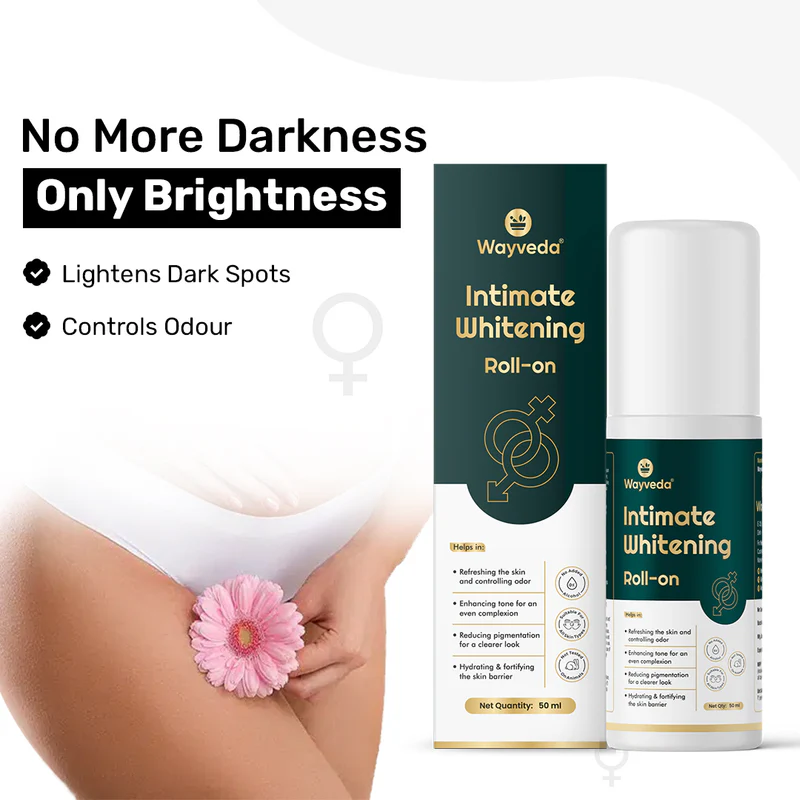
This is why a complete approach matters. The Wayveda Intimate Whitening Roll-On supports daily brightening and skin-tone correction for the inner thigh and intimate area , but its results are most durable when combined with reducing friction, choosing breathable fabrics, managing hormonal health, and maintaining a consistent skincare routine.
Frequently Asked Questions
Why does intimate area skin become dark even with good hygiene?
Good hygiene alone does not prevent darkening because the primary causes are friction, hormonal changes, and moisture buildup , not lack of cleanliness. Addressing these physical and hormonal triggers is what produces lasting results.
Is inner thigh darkening a sign of a health problem?
In most cases, no. It is a normal response to friction and moisture. However, if the darkening is very deep, has a velvety texture, and is accompanied by other symptoms, it may indicate insulin resistance and is worth a medical check.
Does shaving cause dark inner thighs?
Yes. Shaving , especially without proper technique and aftercare , causes micro-inflammation that triggers post-inflammatory hyperpigmentation. Switching to gentler methods and using a soothing aftercare product reduces this significantly.
Can wearing tight clothes cause intimate area darkening?
Yes. Tight synthetic clothing creates friction and traps moisture and heat, both of which are direct causes of hyperpigmentation in intimate areas. Switching to breathable cotton, particularly during rest, helps interrupt this cycle.
How does the Wayveda Intimate Whitening Roll-On help with dark intimate skin?
It delivers brightening actives including alpha arbutin directly to the skin in a gentle, mess-free roll-on format designed specifically for sensitive intimate and inner thigh areas. Used daily alongside trigger-reduction habits, it helps reduce existing pigmentation and even skin tone over time.