Dark inner thighs and a patchy bikini line aren’t signs of poor hygiene. They’re a skin response — one that’s incredibly common and rarely talked about openly. But common doesn’t mean you’re stuck with it.
If you’ve been searching for how to reduce friction pigmentation in private parts, the good news is that it’s manageable. The less good news? Most of what people try — lemon juice, turmeric packs, random body creams — either does nothing or makes it worse. Here’s what actually moves the needle.
What Actually Causes Friction Pigmentation in Private Parts
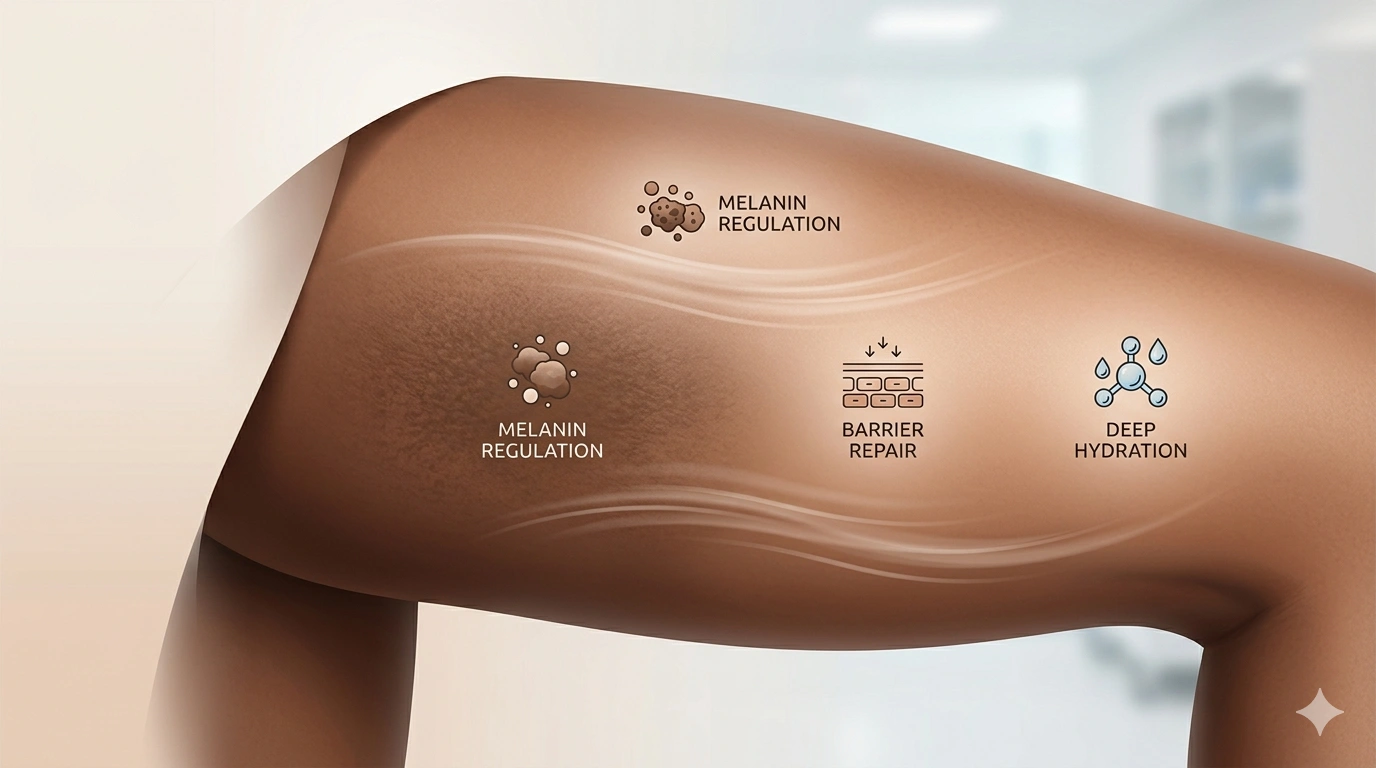
The skin on your inner thighs and groin is thin, sensitive, and under constant movement. Every time your thighs rub together — while walking, exercising, or just going about your day — that repetitive contact creates micro-trauma on the skin surface.
The skin responds to this trauma the same way it responds to a burn or a bruise: it produces more melanin as a defence mechanism. That excess melanin is what you see as darkening. This is the core of how skin discoloration in inner thighs develops — not overnight, but gradually, over months of daily friction.
The causes of dark inner thighs include:
- Thigh-on-thigh friction — the most direct cause; more contact means faster pigmentation buildup
- Tight synthetic fabrics — trap heat, increase moisture, and amplify friction with every step
- Excess sweat — softens the skin and makes it more prone to friction damage
- Rough fabric seams — waistbands and inner-seam stitching on jeans and leggings are silent culprits
Read More: Factors Affecting Pigmentation in Intimate Areas
Why the Bikini Area Becomes Dark Even Without Obvious Friction
Here’s what confuses a lot of people: why does the bikini area become dark even when you’re not particularly active or don’t have heavy thighs? The answer sits deeper than skin level.
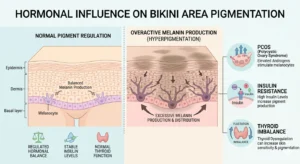
The groin and bikini zone have a naturally high concentration of melanocytes — cells that produce pigment. These cells are also hormone-sensitive. Conditions like PCOS, thyroid imbalance, insulin resistance, and even pregnancy can push these cells into overdrive, causing intimate area hyperpigmentation that has nothing to do with rubbing.
Post-inflammatory hyperpigmentation is another major driver. Waxing, threading, shaving, and depilatory creams all trigger localised inflammation — and that inflammation leaves a dark mark long after the irritation fades. The more frequently you remove hair without proper aftercare, the darker and more persistent those patches become.
Why Most Home Remedies Fail Here
People try lemon juice. They try baking soda. They try vitamin C serums meant for the face. Most of it either does nothing or further irritates the skin — and there’s a clear reason for that, especially when learning how to reduce friction pigmentation in private parts.
The skin in intimate areas has a different pH balance and a more delicate barrier structure than the rest of your body. The American Academy of Dermatology notes that effective hyperpigmentation treatment requires active ingredients that penetrate the upper layers of skin — not just sit on the surface.
Lemon juice is too acidic. Face serums aren’t designed for this skin type. And random body lotions moisturise without addressing melanin production at all. None of these are real friction pigmentation treatment — they’re placeholders that keep you occupied while the pigmentation deepens.
How to Reduce Friction Pigmentation in Private Parts: Habits That Actually Help
Before any product does its job, the environment causing the darkening needs to change. Without this, you’re treating the symptom while the trigger keeps firing.
Step 1 — Switch to breathable fabrics — cotton and bamboo-blend underwear reduce heat and sweat buildup in the inner thigh zone significantly
Step 2 — Apply an anti-friction product daily — non-negotiable if you walk long distances, exercise regularly, or have naturally close-set thighs
Step 3 — Stop shaving dry — always use a barrier — foam, gel, or oil — to prevent post-shave inflammation that directly leads to darkening
Step 4 — Moisturise right after showering — damp skin absorbs active ingredients better; this is when your treatment product does the most work
Step 5 — Ditch tight waistbands — fitted jeans and leggings sitting right on the groin crease cause chronic low-grade friction that adds up fast
These aren’t temporary fixes. They’re the baseline that makes any treatment produce real results.
Read More: Ways to Maintain Even Skin Tone in Sensitive Areas
The Ingredients That Work for Skin Discoloration in Inner Thighs
Not all brightening ingredients are safe for intimate skin. Some are too harsh. Some are formulated for facial skin that behaves completely differently. Here’s what has genuine clinical backing for this specific concern:
- Kojic acid — derived from fungi; inhibits the enzyme responsible for melanin production without stripping the skin barrier
- Niacinamide — reduces melanin transfer to skin cells, evens tone, and strengthens the barrier simultaneously
- Alpha-arbutin — a gentler alternative to hydroquinone, shown to reduce pigmentation with minimal irritation
- Liquorice root extract — anti-inflammatory and brightening; particularly effective for post-inflammatory hyperpigmentation in the bikini area
- Vitamin B3 — works synergistically with niacinamide to calm overactive melanocytes
These ingredients address intimate area hyperpigmentation at the source — not just at the surface — which is why they produce visible results where home remedies don’t.
If you’re comparing product formats, understanding why the best roll-on for intimate whitening works better than creams comes down to delivery method — a roll-on applies without rubbing, which matters significantly on already-sensitive skin.
What Keeps Friction Pigmentation Coming Back
Treating the discolouration is only half the job. The other half is cutting off the cycle that keeps restarting it. These habits are actively keeping skin discoloration in inner thighs alive for most people:
- Wearing sweat-soaked gym wear for hours after a workout
- Using regular soap on intimate skin — soap is alkaline, disrupts the skin’s acid mantle, and causes chronic micro-irritation
- Skipping the inner thigh area in your skincare routine entirely
- Switching products every two weeks before anything has time to work
The top 7 causes of dark underarms and intimate areas overlap significantly — fix one, and the others often improve, because the underlying skin behaviour is the same.
Does a Roll-On Actually Work Better Than a Cream Here?
The format of your product matters more than most people realise, especially for intimate area hyperpigmentation and when focusing on how to reduce friction pigmentation in private parts.
When you rub a cream onto the inner thigh or bikini line, you’re adding friction to skin that’s already been damaged by friction. That rubbing motion can trigger additional melanin production — the exact opposite of what you’re trying to achieve.
A roll-on applicator changes that equation. It glides product onto the skin evenly without any manual rubbing, reduces physical contact with the area, and delivers active ingredients directly. It’s also more hygienic for daily use, faster to apply, and less likely to leave residue on clothing than thick creams or oils.
For this kind of deep-seated pigmentation concern, the method of application is part of the treatment — not just a convenience.
Stop Waiting and Start Treating Friction Pigmentation Properly
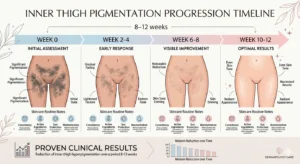
Friction pigmentation in private parts responds to consistency more than it responds to any single miracle product. The people who see real results are the ones who combine the right daily habits with a targeted treatment and stick with both for at least 6–8 weeks.
If you’ve been stuck in a loop of trying random things and seeing no change, the approach needs to shift: address the root cause, target the melanin directly, and use a format that doesn’t add to the irritation.
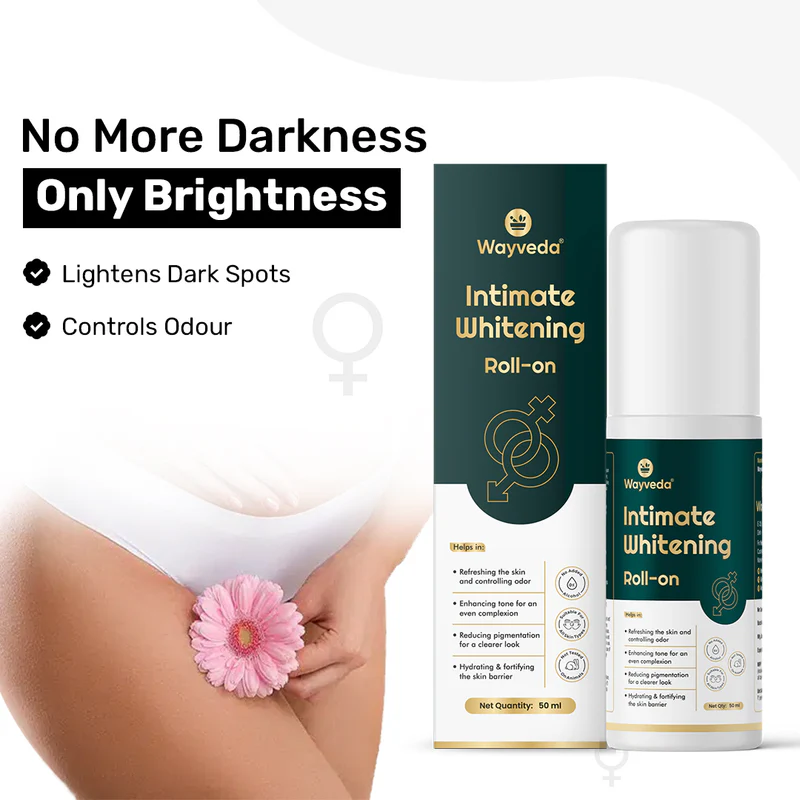
The WayVeda Intimate Whitening Roll-On is formulated for exactly this — built with skin-safe brightening actives, designed specifically for inner thighs and the bikini area, and delivered in a roll-on format that treats the concern without creating new trauma. Use it consistently, pair it with the right daily habits, and how to reduce friction pigmentation in private parts stops being a question you’re still Googling.
FAQ
Q1. How long does the results take to show on dark inner thighs and bikini area?
Most people see visible improvement in 6–8 weeks with consistent product use and lifestyle adjustments. Deep or long-standing pigmentation can take up to 3 months.
Q2.What are the main causes of dark inner thighs?
Repeated thigh-on-thigh friction, excess sweat, tight synthetic clothing, hormonal imbalances like PCOS, and post-shave inflammation are the most common triggers.
Q3. Is this type of darkening in the bikini area permanent?
No. It won’t reverse on its own, but targeted friction pigmentation treatment with proven activities can significantly lighten the area over time.
Q4. Why does the bikini area become dark even without shaving or friction?
Hormonal fluctuations, insulin resistance, PCOS, and the naturally high melanocyte density in the groin area can all cause darkening without any physical trigger involved.
Q5. Can regular skin brightening products help with discolouration in sensitive areas?
Regular brightening products aren’t pH-balanced or formulated for intimate skin. Using them here can trigger irritation, worsen inflammation, and deepen discolouration — always choose products made specifically for sensitive or intimate areas.